
Understanding ALS
Knowledge creates connection. The more we understand ALS, the closer we come to finding a cure.
Amyotrophic Lateral Sclerosis (ALS), also known as Lou Gehrig’s Disease, is a rapidly progressive neurological disorder that affects nerve cells in the brain and spinal cord. Over time, it weakens muscles and impacts movement, speech, swallowing, and breathing.
At The ALS Bridge Foundation, education is one of our core pillars — because awareness drives empathy, and empathy drives action.
-
Because ALS progresses differently for everyone, early signs can vary.
Typical first symptoms include:
Gradual muscle weakness in arms or legs
Trouble speaking or swallowing
Muscle cramps or twitching
Fatigue or balance issues
Difficulty breathing or maintaining posture
Recognizing early symptoms allows for earlier intervention, access to clinical trials, and improved quality of life.
-
ALS affects roughly 30,000 Americans and 3,000 Canadians at any given time.
Each year, about 5,600 new cases are diagnosed in the U.S. alone.
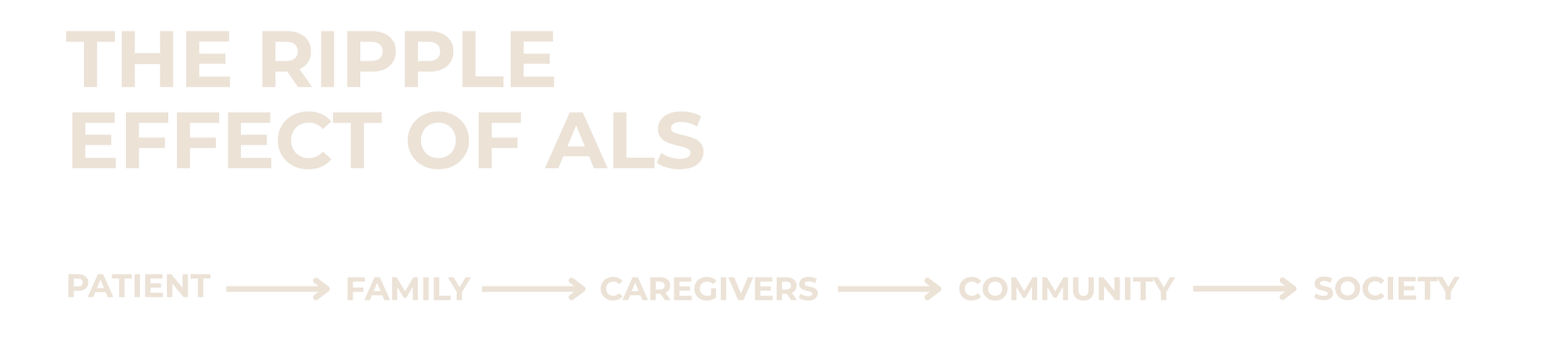
Although rare compared to other neurological diseases, ALS has a profound impact — not only on patients but also on families, caregivers, and communities.
-
ALS affects both body and mind. Physical limitations often lead to emotional and social challenges, including anxiety, loss of independence, and financial stress.
That’s why The ALS Bridge Foundation focuses on more than just research. We aim to build a community of understanding and connection for everyone affected — patients, caregivers, and loved ones alike.
-
ALS causes motor neurons — the nerve cells that control voluntary muscle movement — to break down and die. When this happens, the brain can no longer send signals to the muscles. As a result, the muscles gradually weaken and lose function.
Eventually, ALS affects the ability to move, speak, eat, and breathe. While current treatments can slow progression, there is still no known cure.
-
ALS can affect anyone, anywhere.
Most diagnoses occur between ages 40 and 70, but younger and older individuals can also develop the disease. It crosses all racial, ethnic, and socioeconomic lines.
Every 90 minutes, someone in the United States is diagnosed with ALS.
Globally, an estimated 500,000 people are living with the disease — and that number continues to grow.
-
Scientists are learning that ALS is not caused by a single factor. Instead, it’s likely the result of multiple influences that vary from person to person.
90% of ALS cases are sporadic — meaning they occur without a known family history.
10% are familial, caused by inherited gene mutations.
Ongoing research explores the roles of genetics, environment, and cellular biology in disease development. Each discovery helps narrow the path toward targeted treatments.
More Information and Support
If you or someone you know has been diagnosed with ALS, you are not alone. There are incredible organizations offering information, support, and advocacy resources:
Together, these organizations — alongside ALS Bridge Foundation — are building hope through connection, compassion, and innovation.
Together, we’re creating the connection between compassion and cure
Together, we can connect families, researchers, and communities — and move closer to ending ALS.